
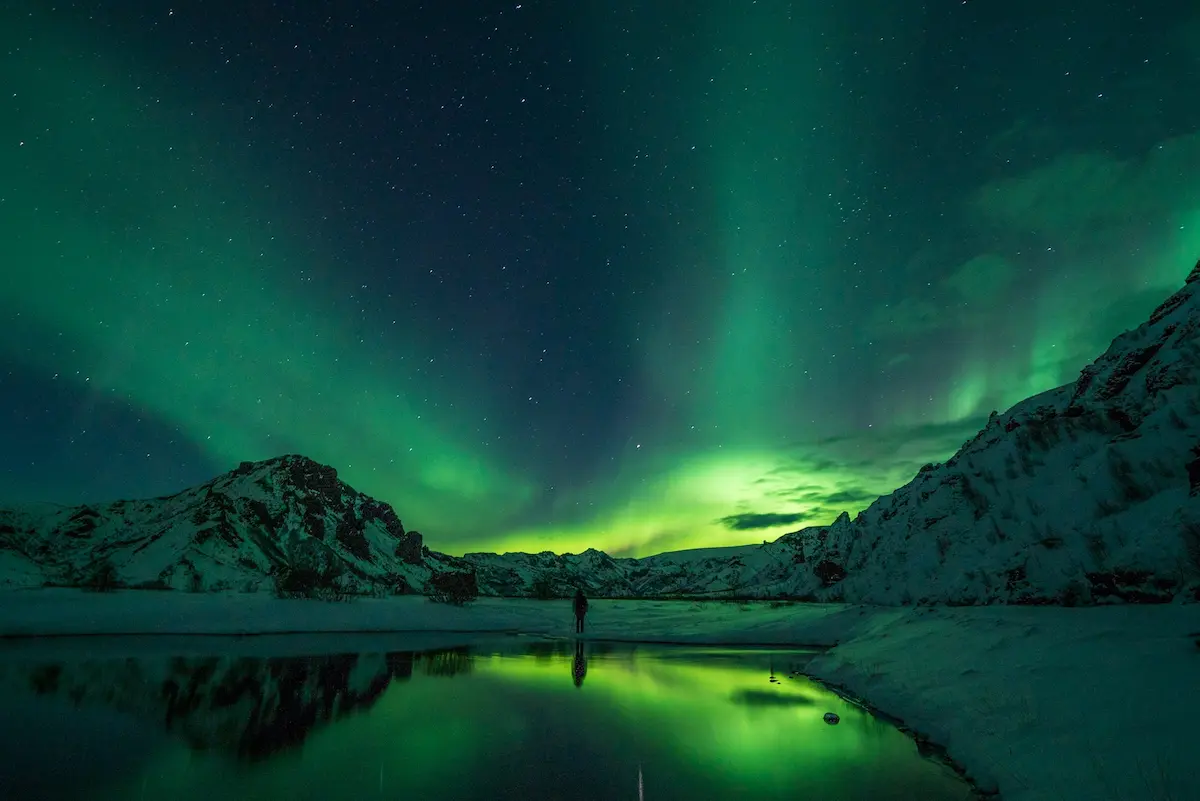
Northern Lights in Iceland: Reykjavik Viewing Guide
Seeing the Northern Lights is one of the most memorable experiences you can have in Iceland.
The aurora borealis is a natural phenomenon, so seeing it requires the right combination of darkness, auroral activity, and sufficiently clear skies. Reykjavik itself can offer Northern Lights viewing opportunities, but traveling away from the brightest city lights can improve your chances of seeing a weaker aurora.
When can you see the Northern Lights in Iceland?
The Northern Lights are visible during the darker part of the year.
For travelers staying in Reykjavik, the practical viewing season is generally from autumn through early spring, when nighttime darkness provides enough contrast to see auroral activity. Visit Reykjavik notes that Reykjavik has dark enough nights for Northern Lights viewing during the colder months, while summer’s bright nights make viewing impractical.
This is one reason Iceland’s Northern Lights season is different from its popular summer travel season.
What causes the Northern Lights?
The aurora is produced when charged particles from the sun interact with gases in Earth’s upper atmosphere.

The result is the moving glow commonly seen in shades of green, although stronger displays can include other colors. The aurora occurs high in the atmosphere and is influenced by solar activity and local viewing conditions.
Can you see the Northern Lights from Reykjavik?
Yes.
You do not always need to leave Reykjavik to see an aurora. There are several viewing locations around the city where darker skies and open views can make Northern Lights observation easier.
However, city lighting can make faint auroras more difficult to see. For a stronger viewing experience, many travelers choose to travel outside central Reykjavik to find darker skies.
Where can you see the Northern Lights near Reykjavik?
A few options around the capital area include:
Grótta Lighthouse
Grótta on the Seltjarnarnes peninsula is one of the better-known Northern Lights viewing spots near Reykjavik. It is an easily accessible location with more open skies than the city centre.

Parks and darker areas
Moving away from busy streets and bright commercial areas can reduce light pollution.
Even within the capital area, finding a darker open area can make a difference when the aurora is faint.
Outside Reykjavik
A private vehicle or organized tour can take you farther away from city lights.
This provides more options if cloud cover or visibility is better in another part of the region.
What weather conditions are best?
Darkness alone is not enough.
You also need sufficiently clear skies so that clouds do not block the aurora. Visit Reykjavik recommends checking both the aurora forecast and cloud conditions before heading out.
This means a night with strong auroral activity can still produce poor viewing if the sky is completely covered by clouds.
How do you check the Northern Lights forecast?
Before heading out, check:
- Aurora activity
- Cloud cover
- Local weather
- Road conditions if you are driving outside the city
Try checking the Icelandic Met Office’s aurora forecast and cloud information.
For road travel, don’t forget to check current weather, road conditions, and alerts because conditions in Iceland can change quickly.
Should you book a Northern Lights tour from Reykjavik?
A tour can make the experience easier for travelers who do not want to plan the driving themselves.
A private tour also gives you more flexibility when deciding where to travel based on the evening’s weather and conditions.
For couples, families, and small groups, private transportation can provide a more comfortable experience than joining a large group.

Taxi Fast Track offers private transportation for Northern Lights outings from Reykjavik.
Explore our Northern Lights service.
How should you dress for a Northern Lights trip?
Northern Lights viewing usually involves spending time outdoors at night, sometimes standing still for long periods.
Wear:
- Warm layers
- Insulated outerwear
- Gloves
- Warm hat
- Waterproof footwear
- Extra layers
- Camera or phone
Even when the daytime weather feels comfortable, nighttime temperatures can be significantly colder.
How to photograph the Northern Lights
Modern phones can sometimes capture auroras surprisingly well, especially when they have a dedicated night mode.
For a camera, you will generally get better results using:
- A tripod
- Manual focus set appropriately
- A longer exposure
- A wide lens
- A fully charged battery
Avoid spending the entire experience looking at your screen. Take a few photographs and then enjoy the view directly.
What happens if you don’t see the Northern Lights?
This is important to understand before booking any Northern Lights experience.
The aurora is a natural phenomenon and cannot be guaranteed. Even with strong forecasts, clouds or changing solar activity can prevent a visible display.
A good Northern Lights trip therefore requires some flexibility. You can also make the evening part of a wider Iceland itinerary rather than treating the aurora as the only activity.
Northern Lights safety and road conditions
Travelers driving outside Reykjavik should take Icelandic weather seriously.
The weather and road conditions can change quickly, and it is recommended to check current conditions and alerts before driving. Don’t stop in unsafe places to photograph the sky, and respect road closures and local safety instructions.
Northern Lights from Reykjavik with Taxi Fast Track
Taxi Fast Track provides private transportation from Reykjavik for travelers looking to explore areas with darker skies.
Private transportation can be useful when you want a more flexible evening itinerary and don’t want to drive unfamiliar Icelandic roads at night.
Planning a Northern Lights trip?
Explore our Northern Lights page or contact Taxi Fast Track to arrange private transportation.


